London Aviation Museum Website
A long-term team project focused on building a modern, accessible museum website that highlights exhibits, history, and educational content through a scalable architecture.
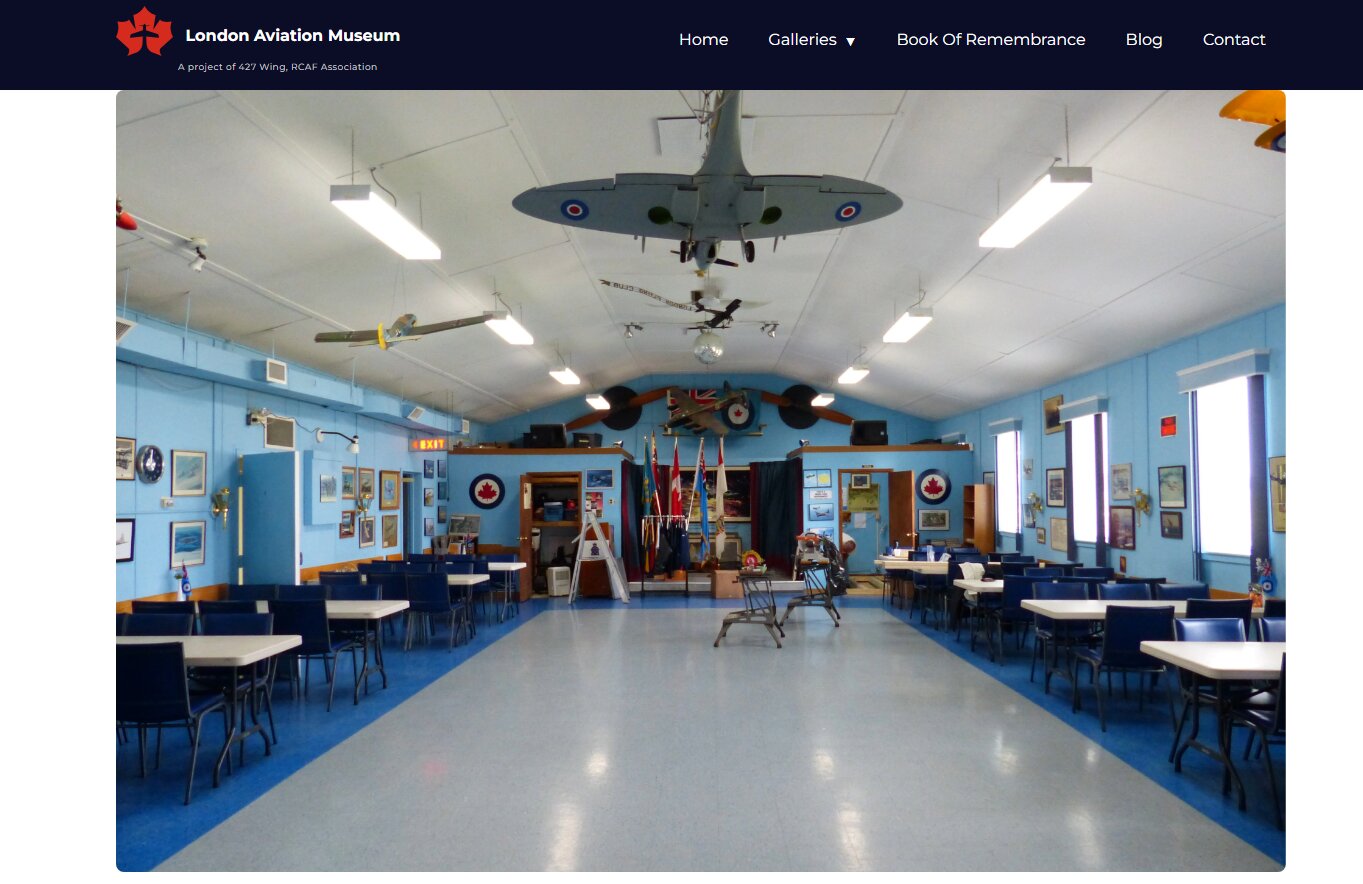
Overview
This full-term group initiative focuses on designing and developing a website for the London Aviation Museum. The objective is to create an engaging digital experience that presents the museum's exhibits, history, and educational value while improving usability and accessibility. As the project moves toward a final competition, our team is aiming for a polished and scalable product with both strong visual presentation and a dependable technical core.
My Role
- Built and maintained core server-side logic.
- Designed and structured the backend database.
- Created and managed API endpoints.
- Handled data flow between frontend and backend systems.
- Supported team integration and cross-layer compatibility.
The Challenge
Long-Term Team Development: Because this project spans an entire term, it requires sustained planning, communication, and iteration. That introduced challenges around keeping team alignment, adapting to evolving requirements, and ensuring all technical pieces stayed synchronized over time.
Scalable Architecture: The site is content-heavy, with exhibits, historical records, and media assets, so the backend had to be organized from the beginning to support growth and maintainability.
Process
1. Backend Planning and Architecture
I helped define how museum data would be structured and retrieved throughout the application. This included schema planning for exhibits, artifacts, and information pages, relationship mapping between data types, and endpoint planning to support frontend features.
This foundation was essential for keeping the project scalable as content and feature scope expanded.
2. Development and API Integration
I developed backend functionality that powers dynamic content across the site, including endpoint creation, consistent JSON response structure, and efficient communication between client and server.
3. Collaboration and Iteration
Cross-Team Coordination: I worked closely with frontend developers to keep data structures and expectations aligned.
Backend Adaptation: I adjusted backend structures as features evolved during iterative reviews.
Integration Support: I helped troubleshoot API and data-flow issues to keep progress moving.
Why This Project Can Win
This project stands out through its combination of technical quality, practical value, and user-focused design. It is being built for a real organization, not just as a concept, which makes the solution immediately relevant and impactful.
- Strong Technical Foundation: The backend is designed to be scalable and maintainable as museum content grows.
- Real-World Use Case: The site serves an actual institution, giving the work practical purpose and measurable value.
- User-Centered Delivery: Clear structure and navigation improve how visitors discover and understand museum information.
Results, Reflection, and Conclusion
The project is still in active development, with core backend systems implemented and integration progressing toward a production-ready release. This work has significantly strengthened my backend capabilities, especially in database design, API development, and team-oriented workflows. It also reinforced how important adaptability and communication are in long-term collaborative builds. Overall, the London Aviation Museum website reflects strong technical depth, real-world relevance, and coordinated team execution, and I am confident in the final direction as we approach competition delivery.