Fanshawe Industry Night Website
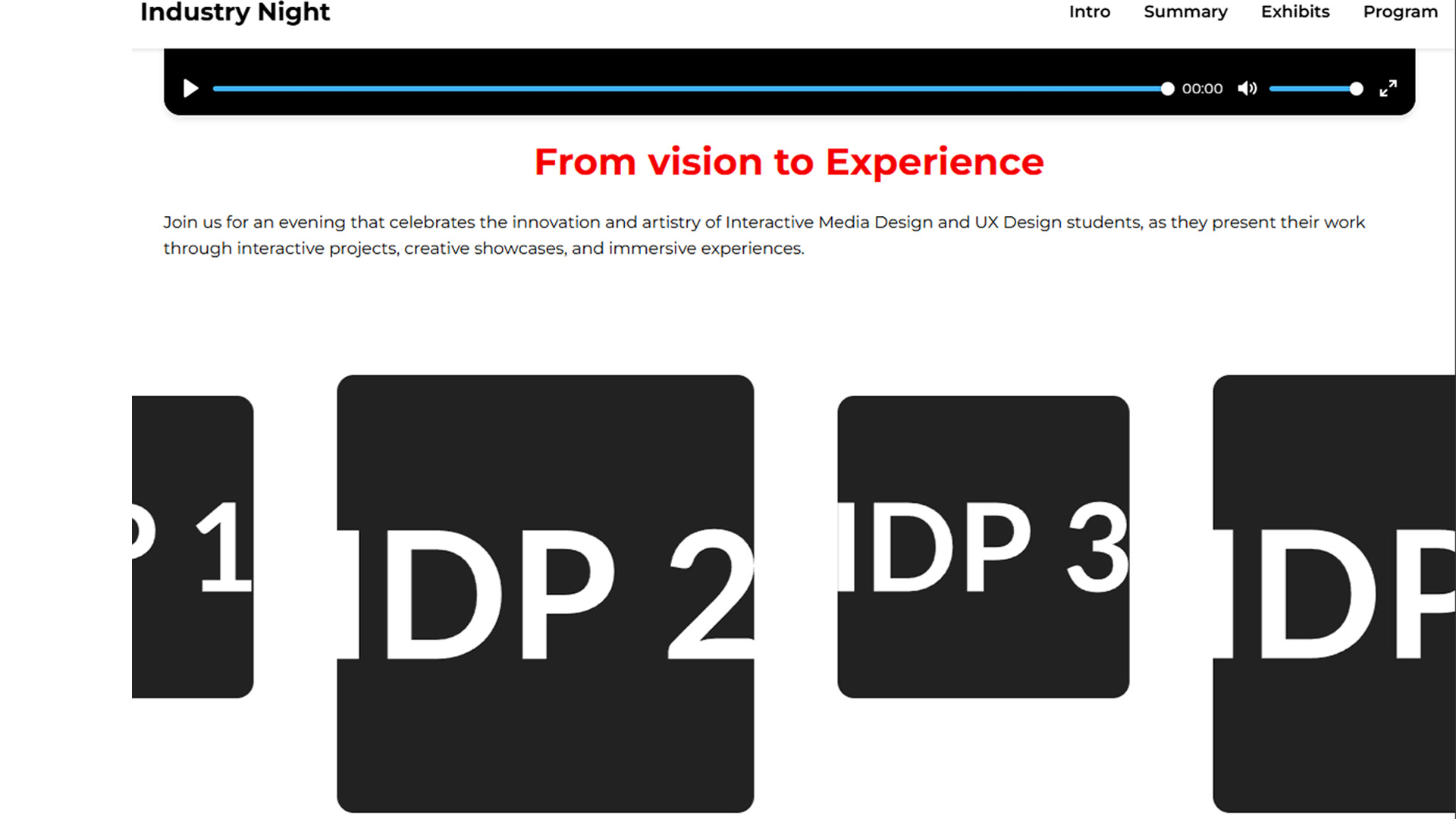
This case study covers a team-based competition project focused on designing and building a polished event website for Fanshawe's Industry Night.
Overview
This project was part of a competitive team assignment to create a website for Fanshawe's Industry Night event. The goal was to deliver a professional and visually strong experience that clearly communicated the event, its purpose, and the people involved, while also standing out against other student submissions. Although our team did not place first, I was proud of the final result and what we managed to produce under pressure.
My Role
- Built front-end layouts and implemented key page structure.
- Contributed to UI and UX decisions across the site.
- Helped shape content organization and user flow.
- Supported the integration of interactive and visual elements.
- Worked with the team to refine consistency as the project evolved.
The Challenge
Competition Pressure: Because the project was part of a competition, there was extra pressure to create something that looked polished and performed well within a short timeframe. That meant making fast decisions and staying efficient throughout development.
Team Communication Issues: One of the main difficulties was miscommunication within the group. Expectations were not always clear, responsibilities sometimes overlapped, and some tasks were left unresolved until late in the process. This created early inconsistencies in both design and implementation and forced us to adjust quickly as the deadline got closer.
Process
1. Planning and Concept Development
We started by discussing the purpose of the Industry Night event and defining what users would need from the site. The goal was to create a clean and modern interface that highlighted event details, participating companies, and opportunities for student involvement.
This early planning stage helped shape the overall direction of the project, even though some communication gaps later affected execution.
2. Design and Development
Design and development moved forward at the same time. While that helped us make progress quickly, it also contributed to some of the communication issues within the team. My focus was on building responsive layouts, turning design ideas into working components, and helping maintain consistency across the site as it changed.
3. Problem-Solving and Adaptation
Clearer Roles: As the deadline approached, we made a stronger effort to define ownership over different sections of the project.
Focused Priorities: We shifted attention toward finishing the strongest possible version of the site rather than over-polishing small details.
Final Adjustments: We made quick design and development updates to bring the project together into a more cohesive final submission.
Results and Takeaways
Even though we did not win the competition, I was happy with what we delivered. The final website was functional, polished, and represented a strong effort from the team despite the challenges we faced along the way.
- Strong communication is just as important as technical execution in collaborative work.
- Setting roles and expectations early can prevent major issues later in the process.
- Being able to adapt under pressure is essential in team-based projects.
Reflection
This project was valuable not only from a technical standpoint, but also from a professional one. It gave me a clearer view of how real team dynamics can affect workflow when things do not go exactly as planned. Despite the setbacks, we were still able to come together and produce a final result that reflected real effort and growth. Although we did not place in the competition, I still see the experience as a success because of what it taught me as both a developer and a teammate.